
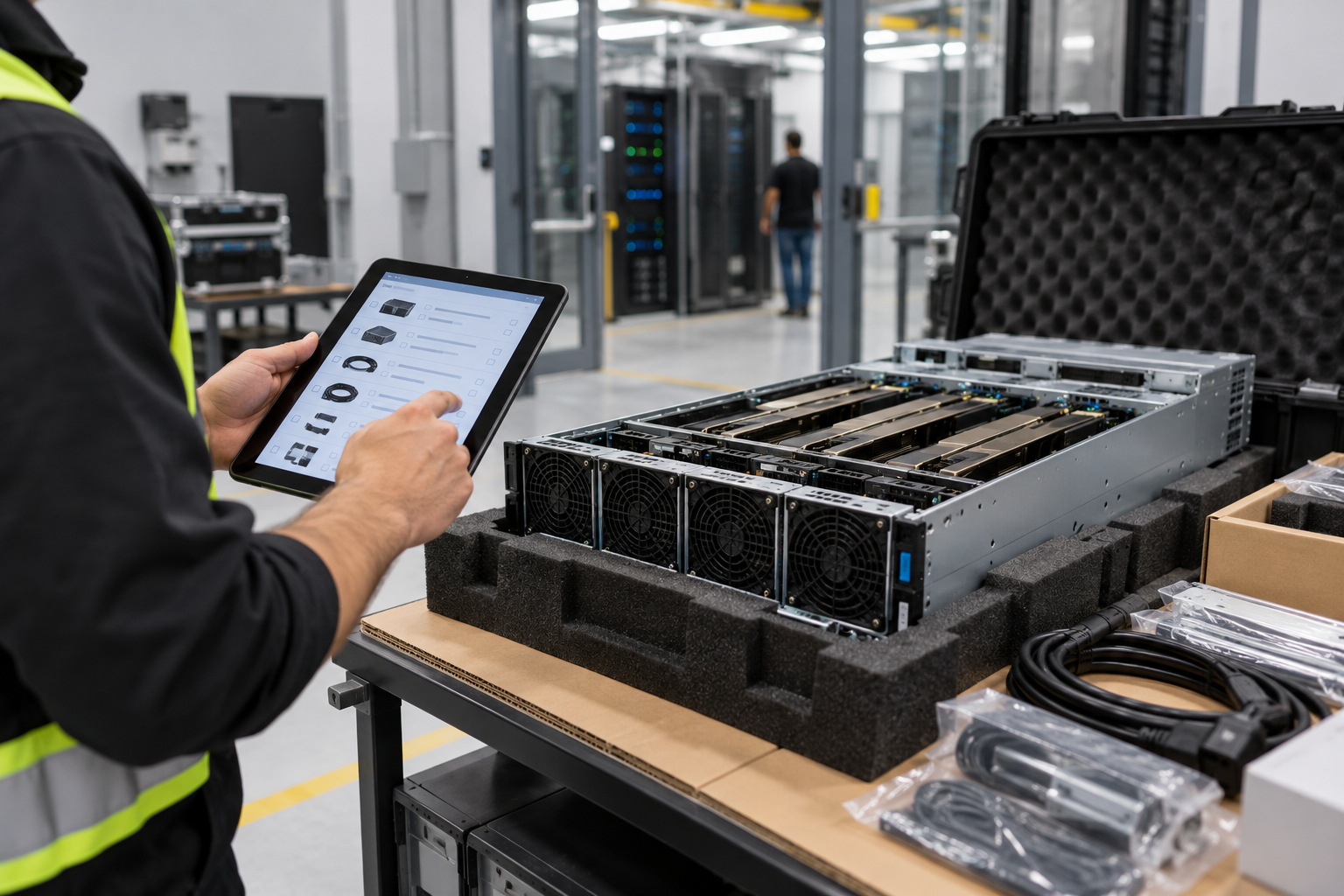
A structured preparation pack helps GPU owners get a useful feasibility assessment before spending money on shipping, facility reservations or integration. It also helps local partners identify missing technical or operational information early.
1. Ownership and authority
- Legal owner and current custodian of the equipment.
- Authorised decision-maker for shipment, installation and operation.
- Any client, financing, leasing or third-party obligations that affect deployment.
- Proof of purchase or other ownership records available for due diligence.
Share sensitive documents through an agreed secure channel rather than placing them in a public enquiry or email thread.
2. Hardware inventory
Prepare a table with server manufacturer and model, chassis dimensions and weight, GPU model and quantity, CPU and memory, storage, NICs, power supplies, input voltage, connectors and total system power requirements. Include firmware and operating-system versions, warranty status, condition, required rails and accessories. Keep serial numbers in the private technical pack.
3. Workload and network profile
Describe the intended workloads and expected operating pattern. Note software dependencies, drivers, orchestration, storage capacity and throughput, inbound and outbound traffic, IP requirements, latency sensitivity, security controls, remote access and data-location expectations. Identify whether the system is standalone or part of a cluster.
4. Facility requirements
Estimate rack units, weight, power draw and redundancy needs using manufacturer specifications. Document cooling or liquid-cooling requirements, network carriers, cross-connects, out-of-band management and physical access. Ask the prospective data centre or integration partner to validate those details rather than assuming availability.
5. Logistics and regulatory review
List current equipment location, proposed destination, shipment responsibility, packaging, insurance, customs documentation and a realistic timeline. Determine which product classification, import/export, customs, licensing and end-use questions require professional review. Do not ship until the relevant parties have confirmed the applicable process.
6. Operations and commercial readiness
Decide who will monitor the hardware, handle incidents, authorise maintenance, provide replacement parts and communicate with end users. If you plan to offer compute services, define the target workload, customer onboarding, usage measurement, billing, settlement, support and service-level expectations. Utilisation and revenue depend on demand and operating terms; they cannot be inferred from hardware ownership alone.
One-page intake template
- GPU/server model and quantity:
- Current location and ownership status:
- Workload and software stack:
- Power, cooling and rack requirements:
- Network, storage and security needs:
- Target deployment window:
- Required local services:
- Known regulatory or logistics questions:
- Existing customers or workloads, if any:
With this information, a deployment partner can start with a technical and operational review instead of making assumptions. PocketChina?s GPU assessment form asks for hardware model, quantity, ownership status, location, required services and expected timing so an initial discussion can focus on your actual situation.